The Science of Acne: Causes, Types and the Truth About Face Mapping

The Science of Acne: Causes, Types and the Truth About Face Mapping

September 23, 2026
Untitled design - 2

Do you ever feel like your skin is actively plotting against you? With bumps, blackheads and breakouts seeming to appear from nowhere at the worst possible times?

Acne might be the most common skin condition among young people1 but that doesn’t mean it’s simple to understand or control. However, knowing what acne is, how it works, and what causes it or makes it worse can give you the tools to help keep your skin looking its best.

In this article we’ll dive into the science of acne in its many forms, find out what causes it, and what you can do about it. We’ll also look at the trend of acne facial mapping and separate the facts from the fiction, giving you evidence-based information and advice you can trust.

How Does Acne Form?

Pimples, blackheads, and other forms of acne don’t just pop up anywhere — they come from specific sites on the skin, called pilosebaceous units.2 These little structures just below the skin are where the hairs grow, and where sebum, a natural skin oil, is produced. Picture them a bit like an old stone well in the ground, where the stones of the inner wall are specialised skin cells (follicular keratinocytes), and the sebum seeps in from small tunnels in the sides (via oil glands). The hair itself grows up the middle and extends above the ground.

When things work properly, skin cells (the stones in our analogy) are gradually shed and pushed up the follicle with the flow of sebum, where they’re cleared through the surface of the skin.2 If there’s a blockage in the well, acne is the result.

You might think that blockages typically come from the outside, like dirt or grime on the skin — debris that can fall in and clog up the well — but that’s not really the case. True, there are some cosmetic ingredients or products that are ‘comedogenic’, meaning they interfere with the normal processes of cell shedding and sebum flow, making blockages more likely,3 but acne is a condition that begins inside the skin.

If there is too much sebum produced, or the cells along the wall of the follicle aren’t shed cleanly or quickly enough, they can stick together and form a plug in the shaft. More sebum builds up behind the plug, which makes an attractive meal for the bacteria Cutibacterium acnes. As the bacteria eats the extra sebum, it releases waste products that worsen inflammation.2 Picture this as a partial cave-in of stones in the well, causing muddy water to build up underneath.

Types of Acne

What Are Blackheads?

Blackheads, also called open comedones, are a non-inflammatory type of acne that get their name from the dark colouring of their outer ‘cap’. The pore, or the opening of the well, remains open, so the skin cells, melanin (skin pigment) and lipids that build up here are exposed to the air and light, causing them to oxidise and darken,4 similar to how a cut apple quickly browns in the open air.

What Are Whiteheads?

If the follicle closes over because of the accumulated skin cells above the blockage, you get what’s called a closed comedone, or a whitehead. Like blackheads, they’re non-inflammatory, but tend to be pale in colour, and firm to touch.2

What Are Pimples?

As sebum continues to build up below the surface with no way out, the walls of the follicle can rupture and leak into the surrounding skin tissue.2 This triggers your body’s inflammatory response, and the cocktail of immune cells, sebum, bacterial fragments and other cellular debris becomes that nasty stuff we call pus.5

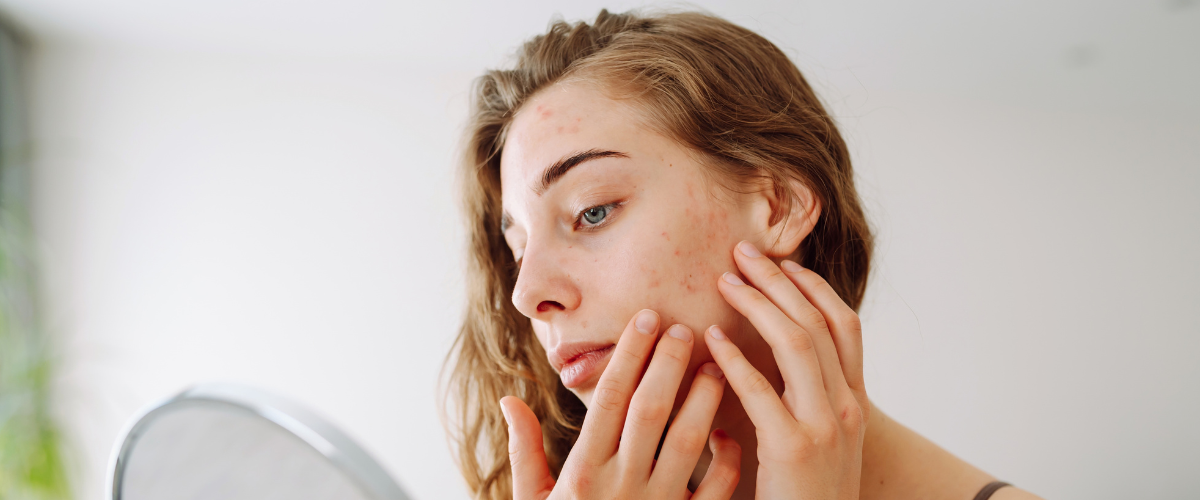
These and other common forms of acne are summarised below.1

Non-Inflammatory Acne

Blackhead (Open Comedone)

  • Appearance: Small dark spot on the skin’s surface.

  • What is happening: Excess oil and skin cells plug the pore. The top stays open to the air, causing the trapped material to oxidise and darken.

Whitehead (Closed Comedone)

  • Appearance: Small, firm, pale or flesh-coloured bump.
  • What is happening: Skin cells seal over the top of the blocked pore. Because oxygen can't enter, the plug stays light in colour.

Inflammatory Acne

Papule

  • Appearance: Small, red, raised bump without a visible head.

  • What is happening: Bacteria multiply inside the blocked pore, triggering immune system inflammation and swelling.

Pustule (Classic Pimple)

  • Appearance: Small, red, raised bump without a visible head.

  • What is happening: Bacteria multiply inside the blocked pore, triggering immune system inflammation and swelling.

Cyst or Nodule

  • Appearance: Large, deep, hard or soft painful lump.
  • What is happening: High pressure causes the pore wall to rupture deep beneath the surface, spilling oil and bacteria into surrounding tissue.

Who Gets Acne?

Acne is extremely common, affecting up to 85% of adolescents and young adults between the ages of twelve and twenty-five.1 While acne peaks around the age of fifteen to twenty for most people, 20% of women and 8% of men continue to have breakouts well into adulthood, and this number only seems to be growing.1 Here are some other things we know play a role in acne:1,6

  • Geography — more common in Western/industrialised countries
  • Genetics — more common if your parents have/had acne
  • Hormones — associated with puberty, periods, pregnancy
  • Mental health — associated with stress, anxiety, depression, low self-esteem
Acne Face Mapping

You might have seen colourful acne face maps floating around social media lately that link acne in different regions of the face to various underlying causes. Some of these maps point to breakouts as evidence of poor health in particular organs, like the heart, lungs, kidneys or liver, which is rooted in Traditional Chinese Medicine.7 So far, however, there is no evidence to support the so-called ‘organ correspondence theory’,7 so there is no need to panic and run to a cardiologist if you get a breakout on your forehead. For that matter, there is also no evidence that acne is your body’s way of expelling internal ‘toxins’.

But what does the science say about acne face maps?

  • T-Zone — You probably know about the ‘T-zone’ of the face, the area covering the forehead and down the bridge of the nose, making a T shape. This area is notorious for having a higher density of sebaceous glands than the rest of the face, which means it produces more sebum.8 Acne in this area may, in part, be connected to stress. Psychological stress releases certain hormones that can ramp up sebum production, which may make pore blockages more likely.9
  • Chin and Jaw — We’ve talked about hormonal acne in detail in this article, but what we didn’t mention is that it’s most commonly seen along the jawline and chin area, and around the mouth. This may be because of a higher concentration of hormones known as androgens and their receptors in this area,10,11 making them hyper-reactive to changes in hormone levels.
How to Help Acne-Prone Skin

Here are our top, rapid-fire tips to keep your skin glowing in a good way:

  • Cleanse regularly, but don’t overdo it — Twice daily, morning and night, seems to be the sweet spot.12 For a gentle, moisturising cleanser that removes dirt and washes away excess oil, try AzClear Action Foaming Wash.
  • Avoid high GI foods — There are still a lot of unanswered questions about exactly how diet affects acne, but there is a clear correlation between sugary, fatty, or high dairy foods/drinks and acne.13
  • Be gentle — There is a strong overlap between acne and sensitive skin,14 so if your skin is easily angered, don’t attack it with harsh treatments. AzClear Action Medicated Lotion* uses azelaic acid, for a gentle but effective spot treatment.15
  • Don’t pick — Picking or squeezing pimples can force the blockage down and outwards into the surrounding skin, making the inflammation worse, and increasing the likelihood of scarring.16

Dealing with acne can feel like fighting an unwinnable war. But by keeping your routine gentle, protecting your skin barrier, and leaving the picking to the professionals, you can help even the odds. Most importantly, remember that stubborn acne doesn’t mean a failure of hygiene or willpower — it’s just biology. If gentle home care isn’t giving you the results you want, book a chat with a doctor or dermatologist to find a personalised strategy that works for you.

*Always read the label and follow the directions for use

Related Articles